Commemorating WWII: The Memorial as a Work of Public History

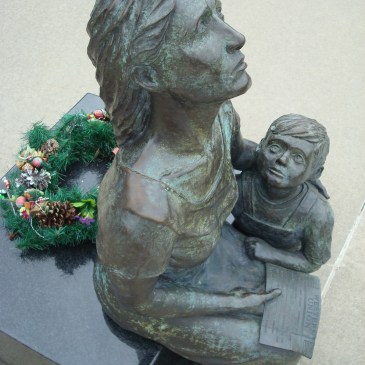
While taking notes earlier this month at the Soldiers Field Veterans Memorial in Rochester, MN, I couldn’t help but overhear the following from another (rather loud) visitor: Kids should come here and read all this stuff because they don’t teach [it] in school. Yes, and no. (Well, more like: yes, and NO!) Yes: there is … More Commemorating WWII: The Memorial as a Work of Public History

The Christian Liberal Arts as Spiritual Retreat

I’m about to head up to the second and final day of Bethel‘s annual faculty retreat, a venerable tradition meant to help us reconnect after a summer away, engage in some professional development (e.g., yesterday I sat in on a session about open access publishing and digital humanities), hear from our leaders, and worship together. … More The Christian Liberal Arts as Spiritual Retreat

The Second World War Before Pearl Harbor: Poland, 1939

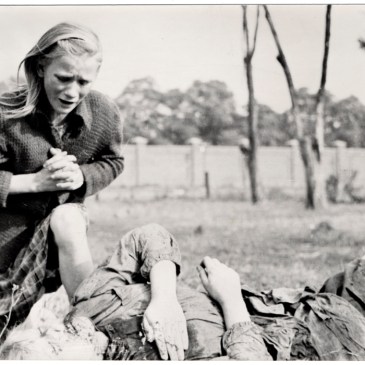
I started this series — introducing American readers to the Second World War as it was fought years before the United States joined the conflict — with Japan’s 1937 offensive against China. Let’s continue with an invasion that’s probably more familiar to most Americans and Europeans: Having already remilitarized the Rhineland (March 1936), absorbed Austria … More The Second World War Before Pearl Harbor: Poland, 1939

Commemorating WWII: Meaning, Power, and Worship

What do war and veterans memorials mean? What should we think or feel when we visit them? And who decides the answers to those questions? Not long after leaving Highway 61 (the famous road that follows the Mississippi River) and entering the southeastern Minnesota town of Wabasha, you’ll arrive at its small Veteran’s Memorial Park. … More Commemorating WWII: Meaning, Power, and Worship

The Big Ten

The ten most popular posts in the last month here at The Pietist Schoolman: How Not To Speak for a Generation: Rachel Held Evans on Millennials Leaving the Church Eighteen Evangelical Colleges Earn a “D” for Finances The Underquestioned Assumption at the Heart of #AHAgate Why Are There No Holidays in August? A Few More … More The Big Ten

What Are the “Turning Points” in American Church History?

Yesterday Elesha Coffman proposed a fun historical exercise over at the Religion in American History blog: develop an American equivalent to Mark Noll’s list of fourteen Turning Points in church history. It’s not as easy as it might seem. For example, she argued that American church history is both too big and too small to … More What Are the “Turning Points” in American Church History?

When Did the Events of 1861-1865 Become “The Civil War”?

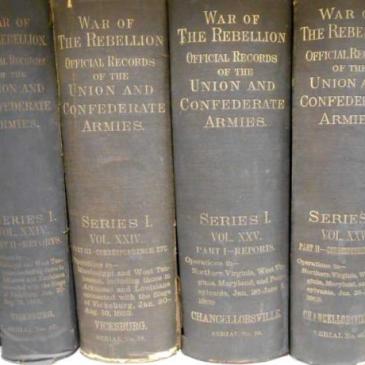
Over the weekend the always-interesting blog Disunion (hosted by the New York Times website) posted “The Name of War,” in which Georgetown University history professors Chandra Manning and Andrew Rothman tracked the evolving answer to a seemingly obvious question: What did Americans call the war fought between the Confederacy and Union from 1861 to 1865? … More When Did the Events of 1861-1865 Become “The Civil War”?