Before I returned to the question of why so many hymnals don’t include popular patriotic hymns, I spotlighted a few songs in this genre that just never found an audience. (Here again, relying on the wonderful resource that is Hymnary.org.)
Presenting seven patriotic hymns that only appeared in one or two hymnals:
Author: Thomas Herbert
Hymnal: The Republican Hymn Book, self-published, 1845
First Lines:
America, thou happy land!
To God thy grateful thanks return
Worst Lines:
At length, your great Creator took
Your cause, and did for you contend,
The strength of savage monsters broke,
And shewed to you he was your friend.
“America, America, our hearts belong to thee“
Author: Alfarata [!] Hilton
Hymnal: Song and Play for Children [!!], Pilgrim Press, 1925
First Lines: Hymnary doesn’t have the lyrics to this, and I couldn’t find them elsewhere. But in looking up the song title, Google did suggest several resources from the American Heart Association, two pages on Native American culture, and songs by Faith Hill and the Osmonds…
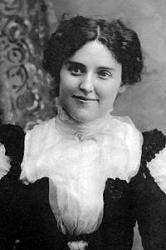
Author: Ina Duley Ogdon (somewhat better known for “Brighten the Corner Where You Are” — sung to “Sibelius” and appearing in about one out of eight hymnals at its peak in 1929)
Hymnal: The Junior Choir, Lorenz, 1908.
First Line:
America, America, to heathen eyes so fair…
Worst Line: Again, no text for this one. But I’m going to go out on a limb and say that, after that first line, there was no place to go but up.
Author: Alma Bridwell White
(Her Hymnary bio demands quotation: “…the founder, and a bishop of the Pillar of Fire Church. In 1918, she became the first female bishop in the United States. She was noted for her association with the Ku Klux Klan and her feminism, anti-Catholicism, antisemitism, anti-Pentecostalism, racism, and hostility to immigrants….
“As a feminist, White was a forceful advocate of equality for white Protestant women. However, she was also uncompromising in her persistent and powerful attacks of religious and racial minorities, justifying both equality for white Protestant women and inequality for minorities as biblically mandated. While the vast majority of her most vicious political attacks targeted the Roman Catholic Church, she also promoted antisemitism, white supremacy, and intolerance of certain immigrants.
“Under White’s leadership in the 1920s and 1930s, the Pillar of Fire Church developed a close and public partnership with the Ku Klux Klan that was unique for a religious denomination. She saw the Klan as a powerful force that could help liberate white Protestant women, while simultaneously keeping minorities in their place.”)
Hymnal: Cross and Crown Hymnal, 3rd ed., Church of the Pillar of Fire, 1949.
First Line:
America, America, I love thee
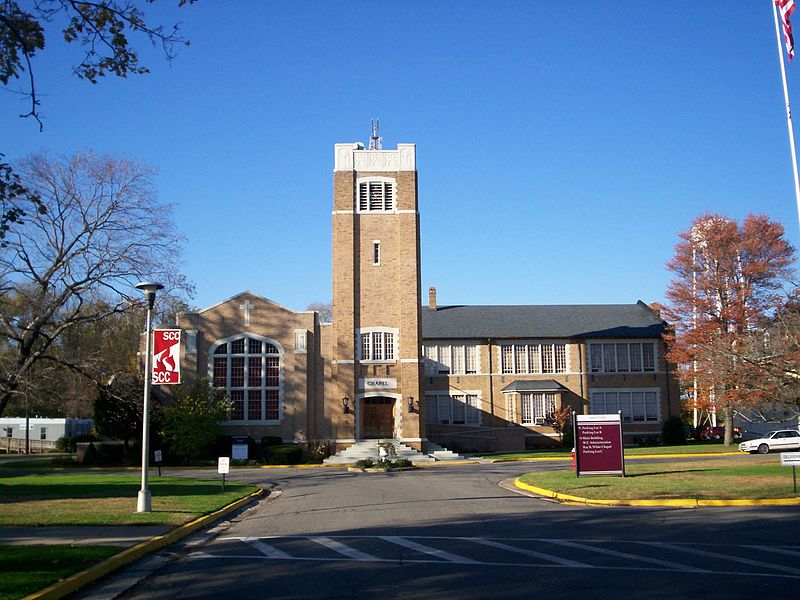
Worst Line: Sorry, no text again… But once again, the process of searching Google retrieved a nugget: from 1921 to 1978 the Church of the Pillar of Fire operated a Bible college in Zarephath, New Jersey named for the church’s founder. The May 20, 1976 issue of the Princeton, NJ Town Topics reported that the students, teachers, and staff of Alma White College — presumably in honor of the nation’s bicentennial — would be performing a cantata entitled <drum roll> “I Love America.”
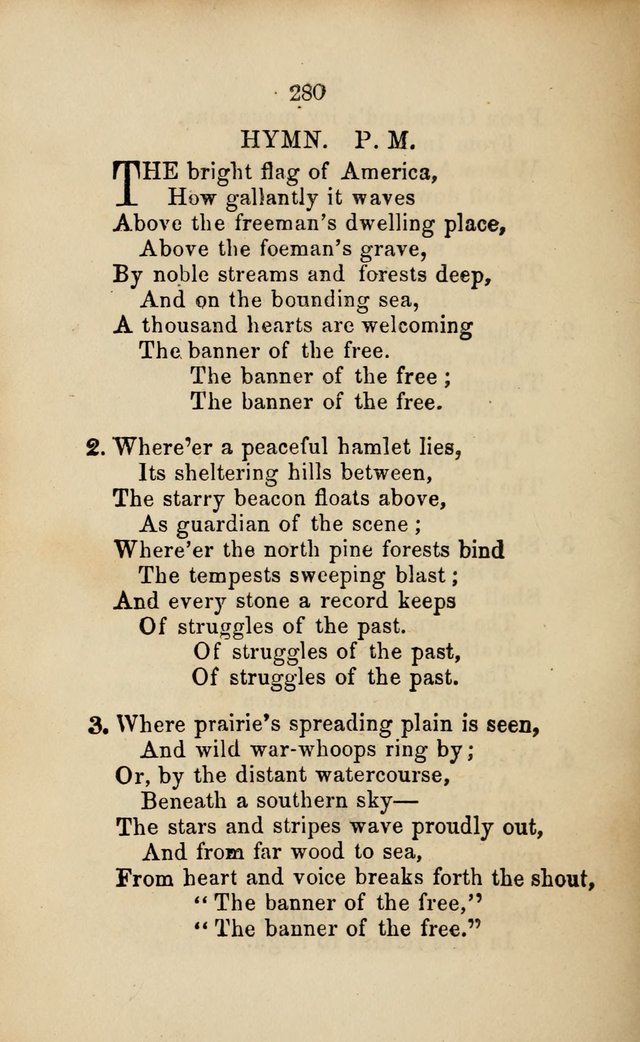
“The Bright Flag of America” (or “The banner of the free”)
Author: Unknown
Hymnals: The Young Singer’s Friend (“The Lee Avenue Collection”), Reformed Protestant Dutch Church, 1859; and The Young People’s Chorister, new edition, C.W. Dunbar, 1860.
First Lines:
The bright flag of America,
How gallantly it waves
Above the freeman’s dwelling place,
Above the foeman’s grave….
Worst Lines: (hard to top this verse…)
Where prairie’s spreading plains are seen,
And wild war-whoops ring by;
Or, by the distant water course,
Beneath a southern sky —
The stars and stripes wave proudly out…
Finally, it’s also worth noting that, in the bicentennial year of 1976, Fred Bock’s Hymns for the Family of God (which I recall supplementing our red Covenant Hymnal in at least one church of my childhood) included two patriotic hymns that were (a) originally written more than three decades before and (b) published in no other hymnal (at least, no other hymnal indexed so far by Hymnary): Don Raye’s “This Is My Country” (1940) and Helen Steele’s “America, Our Heritage” (1943).
 The Pietist Schoolman