“A Christian and a Prince”
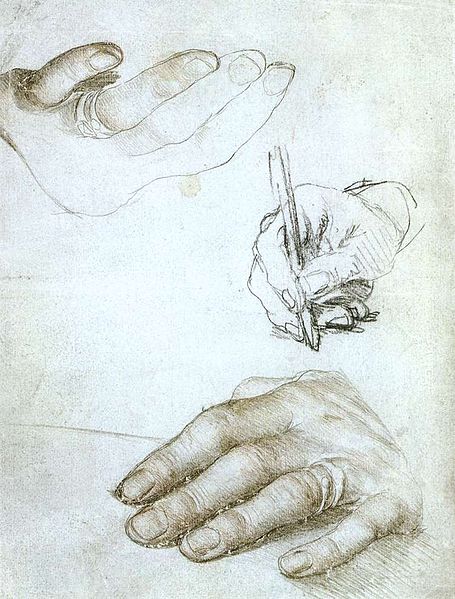
“Being a philosopher is in practice the same as being a Christian,” wrote Erasmus. “…only the terminology is different.” And so even as he advised a well-rounded education that featured a wide range of authors, many preceding the birth of Christ, Erasmus paused to underline that “Whenever you think of yourself as a prince, always remember the fact that you are a Christian prince! You should be as different from even the noble pagan princes as a Christian is from a pagan” (17). Above all else, then, the prince’s education was to teach Jesus Christ: “What must be implanted deeply and before all else in the mind of the prince is the best possible understanding of Christ…. Let him become convinced of this, that what Christ teaches applies to no one more than to the prince” (13).
I don’t mean to suggest a religious test for office in a pluralistic society like the United States, but since we are presented with two major-party candidates who both speak — perhaps not frequently, not not rarely — of their Christian faith, let’s see how Erasmus understood that identifier.
After first recalling the prince to his baptismal oath to “renounce once and for all everything that pleases Satan and displeases Christ,” Erasmus then emphasized that
…on the other hand, do not think that Christ is found in mere ceremonies, that is, in precepts no longer seriously observed, and in the institution of the church. Who is a true Christian? Not just someone who is baptised or confirmed or who goes to mass: rather it is someone who has embraced Christ in the depths of his heart and who expresses this by acting in a Christian spirit. (18)
Here too, I don’t mean to suggest that voters ought to be judging whether Barack Obama or Mitt Romney has “embraced Christ in the depths of his heart” — God alone knows that. But Erasmus simultaneously warns against assuming that a prince’s church membership is meaningful, or that a prince’s actions are meaningless. And the most telling actions, to Erasmus, are not to “have sent a fleet against the Turks or built a shrine or a little monastery somewhere,” but to “show yourself to be a beneficial prince to your people” (18-19). Though “not a priest… nor is he a bishop,” nor a monk, the Christian prince is first and foremost a Christian called to take up the cross and follow Jesus:
‘What then is my cross?’ you may ask. I will tell you. So long as you follow what is right, do violence to no one, extort from no one, sell no public office, and are corrupted by no bribes, then, to be sure, your treasury will have far less in it than otherwise. But disregard the impoverishment of the treasury, so long as you are showing a profit in justice… Finally, if you cannot defend your kingdom without violating justice, without much human bloodshed, or without great damage to the cause of religion, then abdicate rather than that, and yield to the realities of the situation. If you cannot look after the possessions of your subjects without danger to your own life, set the safety of the people before your own. But while you are acting in this way, which is that of a true Christian prince, there will probably be those who call you a fool and not a prince at all. Stand fast in your resolve and prefer to be a just man rather than an unjust prince. You can see, that even the greatest kings are not without their crosses if they want to follow the right course at all times, as they should. (19-20)
Indeed, as Erasmus continued in this vein, it becomes evident that his cross-bearing prince was not merely a follower or lover of Christ and his laws, but one who has grown in Christ-likeness. As ever drawing equally from Christian sources and the “pagan poets and philosophers” whom he had recommended to the attention of his “Christian warrior” in the great 1503 Enchiridion, Erasmus paraphrased Plutarch’s Moralia to the effect that a “beneficent prince… is a kind of living likeness of God, who is at once good and powerful. His goodness makes him want to help all; his power makes him able to do so” (22). After warning his reader not “to swell up with pride on this account” but rather to strive ever harder “to live up to that wonderful archetype of yours,” Erasmus urged the Christian prince to balance the “three principal qualities” that Christian theologians commonly assigned to God: “total power, total wisdom, total goodness…. Power without goodness is unmitigated tyranny, and without wisdom it is destruction, not government” (22).

Here I pretend to make no judgments about which presidential candidate would exercise power with more wisdom or goodness; I trust that both Pres. Obama and Gov. Romney “want to help all” and would strive to use well the power that “makes [them] able to do so.” But I’m struck that — for all the talk on both sides about how this election is “the most significant of our time” or the “choice between two futures for America” — the two candidates are probably as similar as they’re different, and neither has shown much interest in having a conversation about anything like the common good, justice, virtue, or the other factors that Erasmus would stress.
(This is no doubt the fault of the media as well. In his most recent column, Michael Gerson lamented the growing influence of polling data and those who parse them: “Politics can be studied by methods informed by science. But it remains a division of the humanities.It is mainly the realm of ethics — the study of justice, human nature, moral philosophy and the common good. Those who emphasize ‘objective’ political facts at the expense of ‘subjective’ values have strained out the soul and significance of politics. … Over the past decade, there has been a revolt among political scientists against a mathematical methodology that excludes substantive political debates about justice and equality. A similar revolution is increasingly needed in political commentary.”)
Then there’s the attribute of Christ that, above all, would most mark Erasmus’ ideal ruler — as both a Christian prince and, to one like Machiavelli, a fool — and that has been most noticeably absent from the election of 2012.
“He rejoices to be called the Prince of Peace…”
Education of a Christian Prince closes with an extended rumination on the problems of war, which “always brings about the wreck of everything that is good” (102) and against which “the whole philosophy of Christ argues” (105). He asserts that making war, against Christian or non-Christian, is contrary to the reign of God: “…I do not think, either, that war against the Turks should be hastily undertaken, remembering first of all that the kingdom of Christ was created, spread, and secured by very different means. Perhaps it should not be defended by other means than those which created and spread it…. [Christ] left a kingdom unstained by blood and he would have it remain unstained” (108, 110).

Erasmus does not completely rule out the possibility of war being a necessary evil, but urges the prince to “be suspicious of all wars, however just.” (And he casts doubt on the Christian just war tradition itself, asking why the teachings of Christ and the apostles against war is somehow less authoritative than the teachings of Augustine, and asking, “who is there who does not think his cause just?… how could anyone not find a pretext, if any sort of pretext is enough to start a war?”)
He gives numerous reasons to hesitate in going to war (and this is not his principal essay on pacifism — see his Complaint of Peace, also published in 1516). Let me just cite a few:
- War cannot be easily limited: “War breeds war; from a small war a greater is born, from one, two….” (102-103) “We see wars causing wars, wars following wars, and no limit or end to these upheavals” (106).
- If the Christian prince should “hold nothing more dear than the happiness of his people,” then he should struggle with the fact that “while he is learning to wage war, he is compelled to expose young men to all kinds of peril and to make countless orphans, widows, and childless old people, and to reduce countless others to beggary and misery, often in a single hour” (103-104). He must ask himself, “Must I atone for all this before Christ?” (106)
- Indeed, going to war on a foreign foe necessitates waging a kind of war on a prince’s own people: “The people will have to be pillaged, the soldier (not for nothing called ‘godless’ by Virgil) will have to be called in. Citizens must be expelled from places where they have been accustomed to enjoy their property; citizens must be shut in in order to shut in the enemy. It happens all too often that we commit worse atrocities against our own citizens than against the enemy” (107).
- It turns Christian against Christian. Erasmus lamented with bitter sarcasm, “Christ is present in both camps, as if fighting against himself. It is not enough for war to be permitted between Christians; it must also be accorded the supreme honour” (108).
I’m not a pacifist myself (and in a later post this week or next, I’m planning to explore how other Christian pacifists have approved the use of violence by secular governments), but Erasmus’ questions remain timely today — and should have been posed more acutely to both candidates, both of whom have tried to project the idea that they are strong on national security but also slow to go to war.
- Is it possible for a country as powerful as the United States to wage war only on a limited scale, or will it inevitably spread — often in unforeseen directions?
- What have been the effects of our perpetual state of war on the people of the United States: from those physically and emotionally scarred by fighting (or the loss of loved ones) to the enormous financial costs of running huge war budgets (adding to debt and/or requiring cuts to social programs)? How have we made war on ourselves? Not only are civil liberties corroded, but Americans (and foreign noncombatants) have become military targets. (See Conor Friedersdorf’s many reports on the Obama Administration’s use of drones to kill people like 16-year-old American citizen Abdulrahman al-Awlaki. And then note that, when asked about this program in the foreign policy debate, Mitt Romney made clear that he stood with the president.)
- How has war turned us against ourselves? Many lament the polarization of American politics — how has the rhetoric of war seeped into our civic discourse, turning those who disagree with us from fellow citizens into enemies and rivals?
Of course, no ruler — Christian or otherwise — will meet the standards set by Erasmus, as he knew full well. Concluding that the “prince complete with all the virtues” a “fine ideal to entertain” but improbable, Erasmus would have monarchy “checked and diluted with a mixture of aristocracy and democracy to prevent it from ever breaking out into tyranny…” (37). So perhaps the takeaway here is that we should welcome the likelihood that whoever wins the presidential election will do so with no significant popular mandate and be checked by institutions held by the other party.
But if you’re undecided or only leaning in one direction, Erasmus might provide a helpful test that provides criteria for leadership other than those emphasized in TV ads, stump speeches, and punditry. Happy voting, everyone!
 The Pietist Schoolman