The Education of a Christian President

In our Christianity and Western Culture program at Bethel, we refer frequently to the biblical image of being surrounded by “so great a cloud of witnesses.” In my experience, few witnesses have been greater than the Dutch-born writer known as Erasmus (1466?-1536). In class yesterday I mostly presented Erasmus as exemplifying how the “Catholic Reformation” … More The Education of a Christian President

Paul Wellstone: The Conscience of a Liberal (G.W. Carlson)

Ten years ago today, Sen. Paul Wellstone (D-MN), his wife Sheila, his daughter Marcia, and five others died when their small plane crashed en route to Eveleth, MN. Running for a third term in the Senate, Wellstone was scheduled to debate Republican challenger Norm Coleman later that night. It was less than two weeks before … More Paul Wellstone: The Conscience of a Liberal (G.W. Carlson)

For the Last Time, It’s Not a Good Idea to Make Nazi Analogies

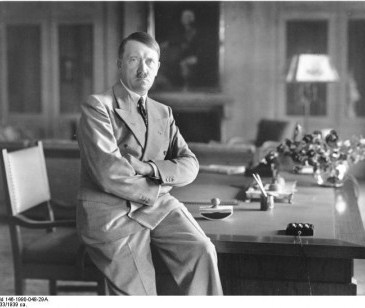
I know that Godwin’s law pertains to Internet discussions, but perhaps it’s also true that the closer we get to a vote on a contentious issue in the culture wars, “the probability of a comparison involving Nazis or Hitler approaches 1.” Take, for example, the state of Minnesota, whose voters will be asked to answer … More For the Last Time, It’s Not a Good Idea to Make Nazi Analogies

Remembering (and Forgetting) George McGovern

I don’t have all that many memories of the former senator and presidential candidate — I was only five when he was voted out of the Senate in 1980, after three terms representing South Dakota — but as a historian I know enough to find interesting what’s being remembered, and what’s being forgotten, as journalists … More Remembering (and Forgetting) George McGovern

The Moral Minority

10/12/12 – Thanks to my recent CFH co-panelist Jared Burkholder for publishing a three-part interview with David Swartz, on his important new history of the “evangelical left,” Moral Minority. Here’s a taste from part one: Swartz explained that, for evangelical readers like myself, he wrote the book “to offer a sense of context. Just about … More The Moral Minority

Close-Minded Christian Colleges?

Yesterday Conor Friedersdorf of The Atlantic extended his critique of what he sees as “epistemic closure” among many conservatives, chastising them for having abandoned genuine engagement in order to shelter inside of their own institutions: For decades, conservatives have complained about liberal control of academia and the media, often with good reason. Diversity of thought … More Close-Minded Christian Colleges?

Rejecting Epistemic Closure: Progressives for Conservatives to Read

Last Monday I encouraged readers to reject the temptation to expose themselves only to those sources that reconfirm their own opinions, as if they have nothing to learn from those with whom they disagree. Julian Sanchez of the libertarian Cato Institute called the phenomenon a type of “epistemic closure” in a series of 2010 posts … More Rejecting Epistemic Closure: Progressives for Conservatives to Read

Two of My “Conservatives for Progressives” Reflect on the State of Conservatism

Yesterday I lauded a variety of conservative writers whom I encouraged my left-leaning friends to include in their regular reading rotation. One reason I recommended many of them is that they possess the rare ability to engage in critical reflection on their own movement. To wit, David Brooks’ New York Times column this morning and … More Two of My “Conservatives for Progressives” Reflect on the State of Conservatism

Rejecting Epistemic Closure: Conservatives for Progressives to Read

In the wake of the 47% fiasco, I very much hope that Republican readers took seriously Michael Gerson’s critique of the “libertarian nonsense” too commonly escaping the lips of GOP politicians these days, and David Brooks‘ conclusion that Romney “has lost any sense of the social compact” and joined other Republicans in shifting “from the … More Rejecting Epistemic Closure: Conservatives for Progressives to Read

Women, Virtue, and Politics: From 1793 to Today

On October 30, 1793, the French National Convention — having repeatedly declined to recognize women’s right to vote — abolished women’s debating clubs and other political societies. It may be tempting to dismiss this as a little-remembered moment of misogyny by revolutionaries five weeks into their Reign of Terror. Except that the Jacobins and other … More Women, Virtue, and Politics: From 1793 to Today