“Saint Mark”: An Appreciation of Mark Hatfield

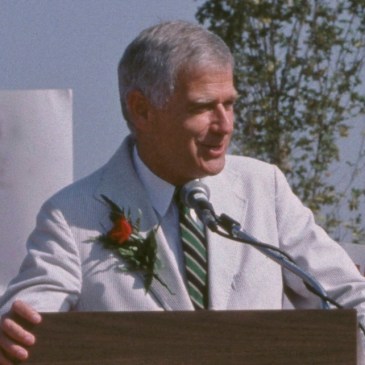
Earlier this summer, Michael Lind suggested that Barack Obama ought to run for the presidency in 2012 — as a Republican. His (satirical) argument was that Obama’s domestic (if not foreign) policies hearken back to the golden years of liberal-moderate Republicanism (think Dwight Eisenhower and Nelson Rockefeller), a time when being fiscally conservative (but not … More “Saint Mark”: An Appreciation of Mark Hatfield

The Usable Past of Christian Colleges

Today I’m starting a new series that builds on a talk I gave at Bethel last spring. It takes up the thesis that Pietism has a “usable past” capable of distinctively and beneficially shaping Christian higher education. Pages and pages have been written on Catholic, Reformed, Lutheran, Anabaptist, and other Christian traditions and how their … More The Usable Past of Christian Colleges

Anabaptist Critiques of Pietism: An Overview

In case you missed any or all of it the first time… Last week I completed a six-part series considering some significant critiques of Pietism by leading Mennonite scholars like Harold Bender and Robert Friedmann. We’ll pick up on some of the themes in a new series starting this week, asking whether Pietism provides a … More Anabaptist Critiques of Pietism: An Overview

This Week in History

Brainstorming possible August holidays last week made me think that some of my readers might appreciate the occasional excuse to declare their own personal celebration and take a day off. So let us commence a new, recurring feature here at The Pietist Schoolman, with the rarely-before-used title, “This Week in History”! August 8, 1988 – … More This Week in History

The Pietist Impulse: Wesley

Part four of our romp through The Pietist Impulse in Christianity raises another deceptively simple question, “Was John Wesley a Pietist?” Even if one accepts a definition of “Pietist” that encompasses people other than early modern German Lutherans, Wesley is a controversial figure. He is included in Carter Lindberg’s popular collection, The Pietist Theologians, and … More The Pietist Impulse: Wesley

What Pietists Can Learn from the Anabaptist Vision

Today we come to the end of a series that has looked at 20th century (neo)Anabaptist critiques of Pietism, starting with Harold Bender‘s influential “Anabaptist Vision” speech and Robert Friedmann‘s famously anti-Pietist “thesis.” After a pause to sum up that critique and look at its continuing influence, we examined how revisionist and post-revisionist Anabaptist historians … More What Pietists Can Learn from the Anabaptist Vision

The Pietist Impulse: Modernity

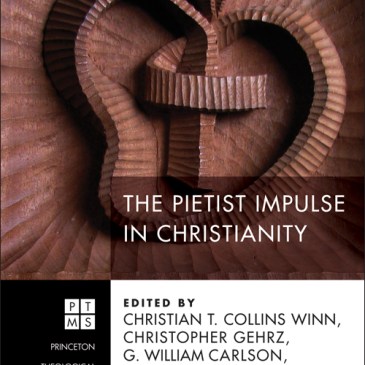
As we’ve already heard from Roger Olson, Pietism is often caricatured as being anti-intellectual, and Pietists as being so concerned to avoid head-centered “dead orthodoxy” that they substitute heart-centered emotional subjectivism. In part three of our series previewing chapters in our new book, The Pietist Impulse in Christianity, we find that tension, but more importantly, … More The Pietist Impulse: Modernity