Peace on Earth: Connecting the Cuban Missile Crisis and Vatican II

In the space of four days I’ve blogged about two events marking their 50th anniversaries this year: the Second Vatican Council (which started October 12, 1962) and the Cuban Missile Crisis (Oct. 16 of the same year). In different ways, they were among the most important events of the 20th century, but I’d never thought … More Peace on Earth: Connecting the Cuban Missile Crisis and Vatican II
The Cuban Missile Crisis, 50 Years Later

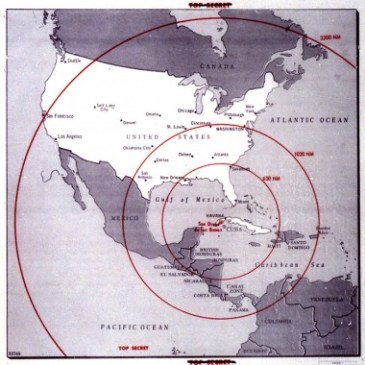
Fifty years ago this morning, American national security adviser McGeorge Bundy showed President John F. Kennedy photographs taken by U-2 spy planes that had flown over Cuba two days earlier. CIA analysts concluded that the photos revealed that the Soviet Union had succeeded in deploying medium-range ballistic missiles to bases within mere minutes’ flight of … More The Cuban Missile Crisis, 50 Years Later

Best of The Pietist Schoolman: Terror, Secularization, and “Imaginative Understanding”

While I work on another post for Tuesday, enjoy this post from last fall prompted by the collision of a couple of discussions in one of my signature courses at Bethel. In the last two weeks of my Modern Europe course, we’ve twice run headlong into the hardest question historians ask: Why? First, I had … More Best of The Pietist Schoolman: Terror, Secularization, and “Imaginative Understanding”

Roger Olson on Denominations and Christian Unity

If you don’t normally read Roger Olson’s blog, check it out: he’s on a roll. I’ve probably got three or four posts to write that have been inspired by something Roger’s written, but let me start with the most recent topic: denominations. I know this will shock many people, but my attitude toward denominations is … More Roger Olson on Denominations and Christian Unity

The Moral Minority

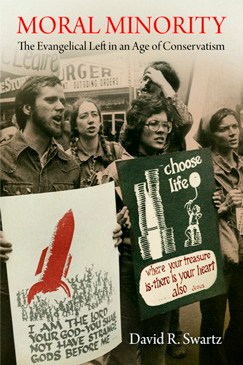
10/12/12 – Thanks to my recent CFH co-panelist Jared Burkholder for publishing a three-part interview with David Swartz, on his important new history of the “evangelical left,” Moral Minority. Here’s a taste from part one: Swartz explained that, for evangelical readers like myself, he wrote the book “to offer a sense of context. Just about … More The Moral Minority

Close-Minded Christian Colleges?

Yesterday Conor Friedersdorf of The Atlantic extended his critique of what he sees as “epistemic closure” among many conservatives, chastising them for having abandoned genuine engagement in order to shelter inside of their own institutions: For decades, conservatives have complained about liberal control of academia and the media, often with good reason. Diversity of thought … More Close-Minded Christian Colleges?

You Can’t Spell Fundamentalism without Fun

I’m afraid that fundamentalism didn’t come off so well at our “Pietism and Christian Colleges” session this past Saturday at the Conference on Faith and History. Both in Jared Burkholder’s paper on Pietism and scholarly virtues and Kurt Peterson’s on the Evangelical Covenant Church in the 1950s, fundamentalism showed its least attractive face: suspicious, uncharitable, … More You Can’t Spell Fundamentalism without Fun

Checking In with the Bethel History Department Blog

Over at AC 2nd, the blog of the Bethel University History Department, we’re in the middle of what my fellow blogger-department chair John Fea might call a “membership drive.” The blog’s been in business for about eight months now, and on the heels of Bethel’s Homecoming we just sent out an e-mail inviting all of … More Checking In with the Bethel History Department Blog