A relatively short links post, as I’m spending Friday afternoon and Saturday morning at the annual meeting of the Northwest Conference of the Evangelical Covenant Church.
Here…
• “Hey, Pietist Schoolman, can you tell me what percentages of colleges to open each decade since 1900 failed to survive it? Oh, can you throw in a scattergraph?” Sure.
• In shameless ploys for hits from bibliophiles and the Grantham, Pennsylvania metropolitan area, I professed my love for libraries and John Fea’s “virtual office hours.”
…There and Everywhere
 • My favorite librarian this week: Abdel Kader Haidara, who hid nearly 300,000 medieval manuscripts from the Islamists who terrorized Timbuktu last year.
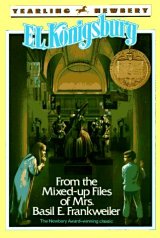
• One library book that I checked out more than a few times growing up was From the Mixed-up Files of Mrs. Basil E. Frankweiler. Its author, E.L. (Elaine Lobl) Konigsburg died Friday.
• Alan Jacobs on C.S. Lewis: children’s literature as “schooling for desire.”
• Now that the Digital Public Library of America has been open for a week or so, the reviews are starting to accumulate, including those by Lincoln Mullen and the more conflicted Scott McLemee.
• Wednesday marked the 98th anniversary of the beginning of the genocide that claimed the lives of hundreds of thousands of Armenians.
• Don Miller thinks that the Kermit Gosnell case has the potential to “serve as a catalyst for a broad conversation about when life begins and what we are going to do as a country on the issue of abortion,” but he urged fellow pro-lifers to respond with a “Christ-centered methodology of communication” rather than the angry self-righteousness of the past.

• I’m not sure that Bart Ehrman and I share the same definition of what it means for an early Christian gospel to be “authentic,” but I can’t quibble with his examples of the “apocryphal” — e.g., the gospel that has Jesus seduce a woman he pulls from his side.
• After getting the chance to teach John Henry Newman’s The Idea of a University, Greg Peters came away with “a new vision and vigor for what I do – teach general education (or, in Newman’s terminology, Universal Knowledge) for the purpose of educating students liberally in a university.”
• I’ll bet John Henry Newman also reacted this way when his students failed to staple their papers. (And yes, the stapler was invented several years before his death in 1890.)
 The Pietist Schoolman