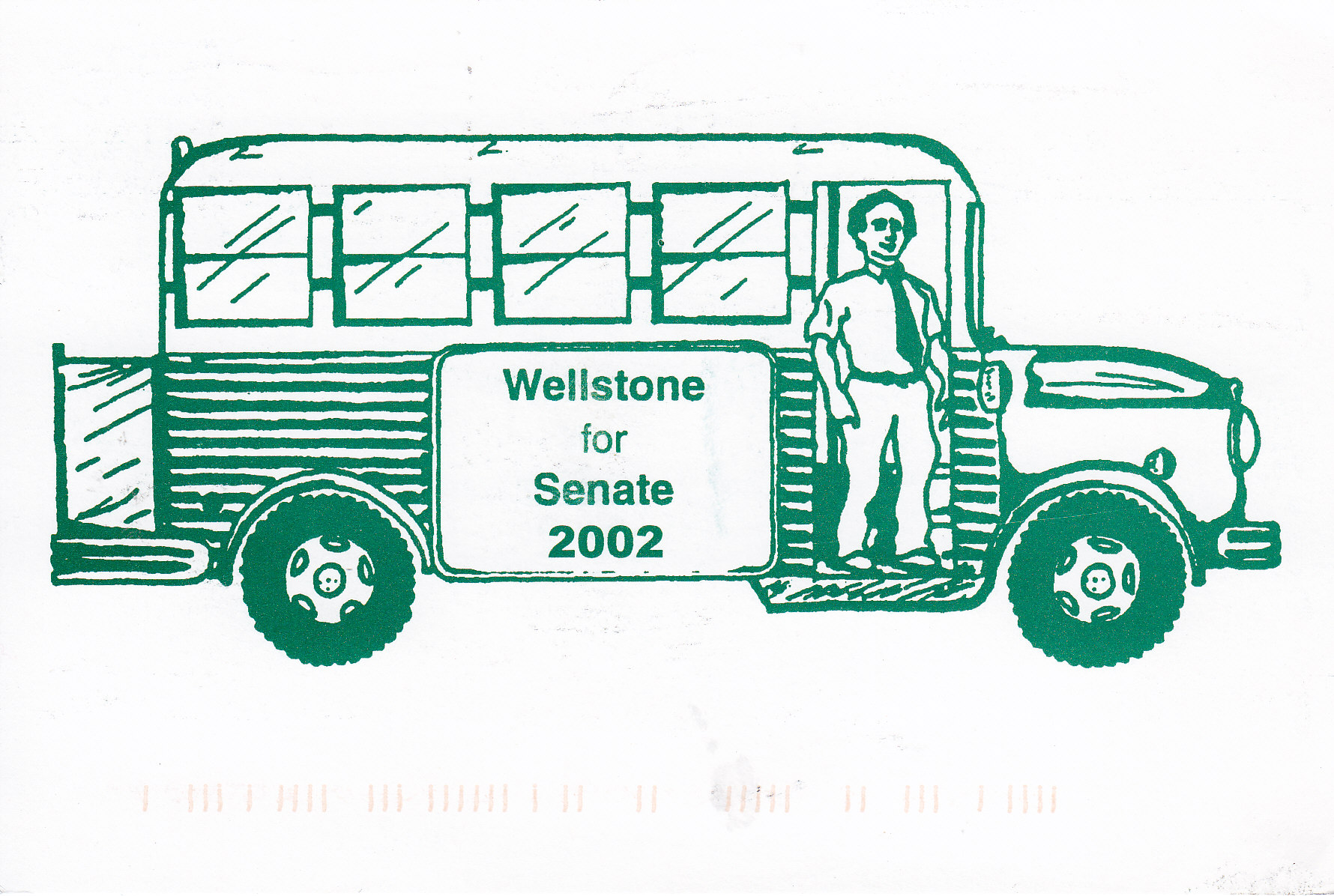
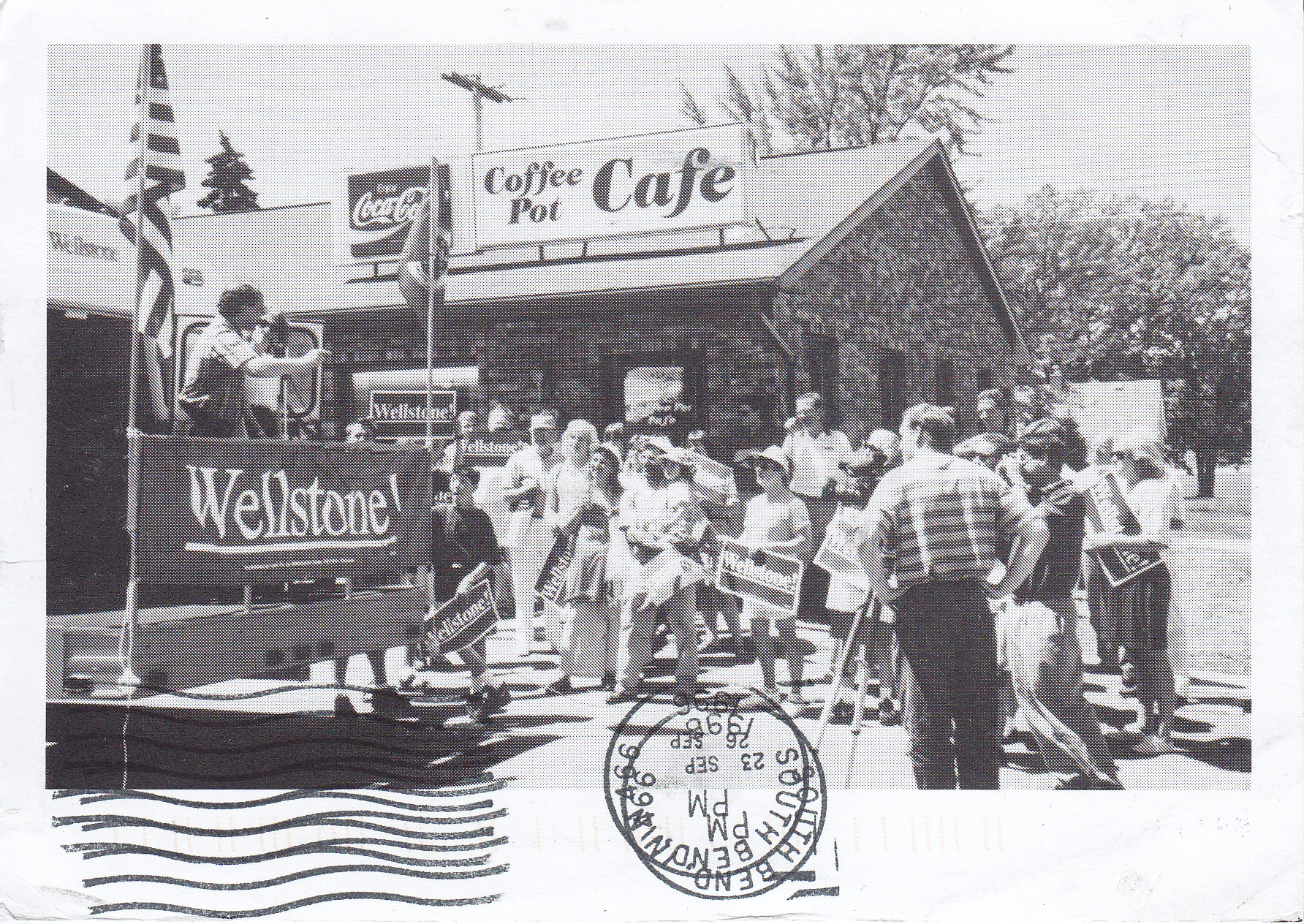
Over the years I have had the opportunity to develop a substantial political memorabilia collection, which was recently featured in The Old Times, a newspaper of Minnesota antique dealers. In my basement is a strong collection of Wellstone political memorabilia including DVDs of his campaign advertisements, numerous political buttons and bumper stickers, lawn signs, political shirts, and a Wellstone puzzle. Some buttons and bumper stickers have the phrase “WWWD” on them. The “What Would Wellstone Do?” campaign includes the development of a Wellstone Action program that encourages “moral progressives” to continue Paul’s work.
As I look over the 2012 election there seem to be five major issues that need to be addressed:
- the growing plutocratic nature of the American political process, especially after Citizens’ United
- a growing inequality divide in the economic and social order
- a challenge to the legitimacy of the New Deal consensus through efforts to privatize Medicare and Social Security and to minimize food stamps, earned income tax credit, unemployment compensation, and education aid
- efforts to use voter ID laws and process manipulations to suppress the votes of students, senior citizens, persons of color, and people in poverty
- and the need to wrestle with significant environmental issues.
The WWWD movement can help people regain the legitimacy of the “moral liberal” crusade that Wellstone attempted to mobilize.
We live in a dangerous age of political polarization where politics is warfare, your opponent is the enemy, and the purpose is destroy those who disagree with you. While my car bumper sticker reads “Worship Your Faith, Not Your Politics,” for many “politics” has become a new religion. I was told in 2008 by a political friend on the right that there are two parties: a secular humanist party and a Judeo-Christian party. What a dangerous conclusion. The conservative movement has dumped its compassionate conservative values and replaced them with an authoritarian religious right and a dangerous libertarian individualism.
However, I do believe that liberals are mistaken in ignoring the values of a liberalism that has been built by people of faith. This includes the rise of the trade unions, women’s suffrage, civil rights, and the drive for economic and social justice safety nets. Liberalism must regain its religious/moral heritage. One could look at the current issue of Sojourners magazine, at a document entitled Why Voting Matters, to have some understanding of a evangelically defined moral liberalism.
The previous issue of the same magazine included a series of tributes to Paul Wellstone. Rev. Doug Mork, a former labor organizer and now the lead pastor at Cross of Glory Lutheran Church in Brooklyn Center, MN, asked what might be Paul Wellstone’s legacy: How might we use his life as a way to think about political issues today? Mork wrote:
I think it’s pretty simple. Paul believed intensely in people. He believed in a world of abundance, not scarcity, though perhaps he wouldn’t have used exactly those words. He truly believed in politics as an extraordinary tool for the common good. He was an organizer, a weaver of disparate communities into a strong fabric of shared purpose. While he lambasted corporations and the consolidation of power in the hands of the few, he always believed that together, people could prevail. And he wanted every group of marginalized people to join him.
More than just believing any of these grand ideas, he lived them out. He strategically and systematically invited community after community to join him, to test the waters, to see what it feels like to organize around shared values.
 The Pietist Schoolman
One thought on “Paul Wellstone: The Conscience of a Liberal (G.W. Carlson)”