Noting that such small commemoration is now joined by a revival of interest in the war in popular culture (to wit: Spielberg’s adaptation of War Horse, the second series of Downton Abbey, etc.), he observes that “The last old soldier or sailor has died and almost all of the witnesses have gone, but the war exerts a tenacious hold on the imagination,” particularly for Britons like himself:
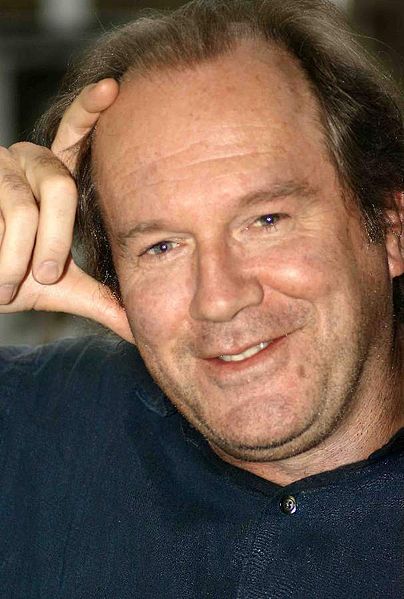
For us British, the memories, images and stories of 1914-18 seem to have a persistence and a power that eclipse those of the Second World War. I’m symptomatic of this urge to revisit the conflict: my new novel will be my third with the First World War at its center. When I wrote and directed a movie, “The Trench,” about a group of young soldiers in 1916 waiting for the Battle of the Somme to begin, I was obsessed with getting every detail right: every cap-badge worn and cigarette smoked, every meal eaten. It was as if I wanted the absolute verisimilitude to provide an authentic, vicarious experience so the viewer would be in a position to say, “So this is what it was like, this is what they went through, how they lived — and died”….
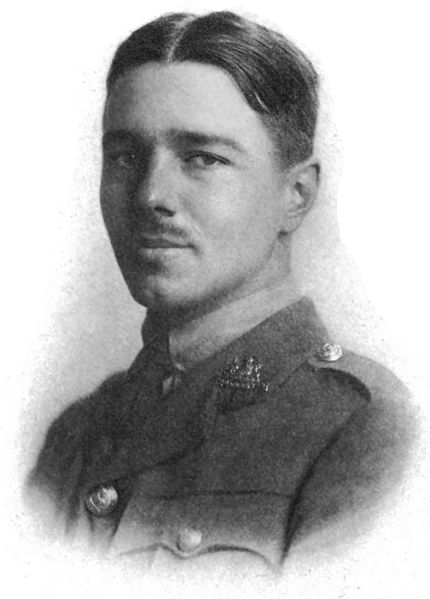
Wilfred Owen (1893-1918)
IN France and Germany, the traumas of the Second World War have to a degree erased memories of the First. But in Britain, where almost a million servicemen died, it’s still images of the trenches of the Western Front that are shown and that resonate on Remembrance Day. One of the reasons for this is, paradoxically, the resonance of the poetry. The poets of the First World War — Wilfred Owen, Siegfried Sassoon, Edmund Blunden, Isaac Rosenberg — are taught in almost all British schools. I can remember Wilfred Owen’s terrifying poem “Dulce et Decorum Est,” about a mustard-gas attack, being read aloud to us in the classroom when I was 10 or 11. One boy actually ran outside, he was so overcome and upset. The war poems shaped your earliest perceptions of the First World War and were swiftly buttressed by the familiar images of the trenches and the histories of the futile, costly battles.
The entire piece is worth a read. I’m sure it will be one of many such reflections penned as we build to summer 1914 and the centennial of that terrible conflict’s beginning.
FYI – the featured image for this post that shows up on the blog home page is a detail from the Canadian war memorial in Vimy, France. A statue of “Mother Canada” (or “Canada Bereft”), it stands in front of the memorial and looks down on the names of dead Canadian soldiers.
 The Pietist Schoolman