CFH 2014: Christian Historians, Social Media, and Institutional Change

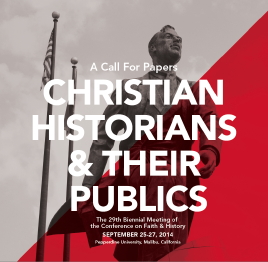
I thoroughly enjoyed the first two biennial meetings of the Conference on Faith and History (CFH) that I attended, at Bluffton University in 2008 and Gordon College in 2012. But I’m even more excited to take part in the 2014 meeting this September at Pepperdine University. And not just because Malibu is a bit more attractive … More CFH 2014: Christian Historians, Social Media, and Institutional Change

A Pietist Model of Christian Scholarship: Transformation and Character

In the first part of this post, I offered a Pietist critique of “the integration of faith and learning.” Today, as I continue to rework my recent presentation to Bethel’s annual faith-learning faculty workshop, I’ll tentatively suggest how Pietism might offer an alternative to the “integrationist” model of Christian scholarship. (I had intended this to be a … More A Pietist Model of Christian Scholarship: Transformation and Character

D-Day at 70

Seventy years ago today, Allied forces landed on the beaches of Normandy — opening the long-promised “second front” in the European experience of World War II and ultimately sealing the fate of the Third Reich. There’s plenty of coverage of the anniversary — let me just suggest a few links: • The Washington Post has a striking photo … More D-Day at 70

A Pietist Model of Christian Scholarship: Against Faith-Learning Integration

What would Christian scholarship look like if rooted in the Pietist tradition? Would Pietists affirm something like “the integration of faith and learning”? Yesterday I had the chance to talk about these questions as part of Bethel’s annual faith-learning workshop for faculty on the cusp of applying for tenure. Thanks to workshop facilitator Kathy Nevins for the invitation! (Kathy … More A Pietist Model of Christian Scholarship: Against Faith-Learning Integration

Post #1000… and a Change of Blogging Pace

According to WordPress, this is my 1000th post at The Pietist Schoolman. Now, I know bloggers who publish that much every year (or even more often than that), but their posts tend to consist of long quotations from other sources with some brief commentary. Since mine are most often original essays of 1000-1500 words, the fact that I’ve … More Post #1000… and a Change of Blogging Pace

Should Christian Higher Education Be “Safe”?

In many Christian circles, secular colleges and universities can sometimes get a bad rap. Parents are warned that their children will “lose their faith” in these environments and that professors will intentionally undermine their beliefs. Politically conservative Christians routinely express their belief that American colleges and universities are out to brainwash their kids with leftist … More Should Christian Higher Education Be “Safe”?

“GehrBerr,” or On Teaching as Collaboration

I’ll be spending most of today at a program assessment workshop with my friend and colleague Sam Mulberry. Next Monday we’ll help run the annual summer workshop for Bethel’s Christianity and Western Culture (CWC) teaching team. About three weeks after that, we’ll start co-teaching the online version of CWC for the second year in a row. And in … More “GehrBerr,” or On Teaching as Collaboration

The Week Is Dead, Long Live the Week!

Over at Slate writer Ben Schreckinger argues that the seven-day week has outlived its usefulness: The pattern of living on a seven-day cycle—with one or two of those days set aside for rest—is a relative novelty. Only in the past few centuries, with Western colonization of most of the world, have the majority of human societies adopted it. … More The Week Is Dead, Long Live the Week!